
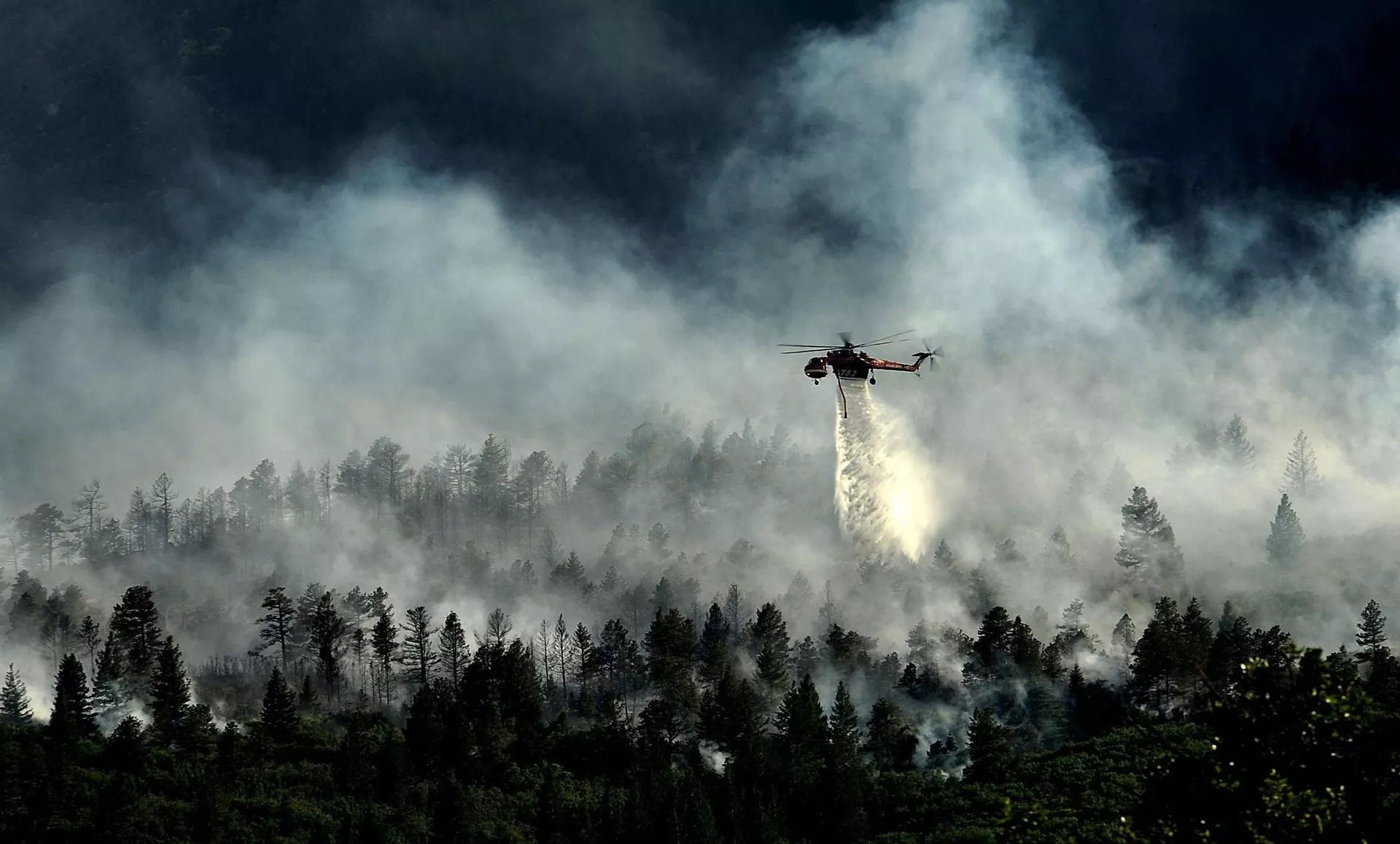
Wildfire prevention in Crete, Greece
” What Landowners need to know “
When Nature Burns
Every summer, the same anxiety: temperatures rise, the land dries up, the risk of fire lurks. We live in a country blessed with natural beauty, but also vulnerable—especially in the summer months. Fires are no longer just a possibility, but a recurring threat.
Yet, we can make a difference. Not through exaggeration or panic, but through small, responsible actions that matter. All of us.
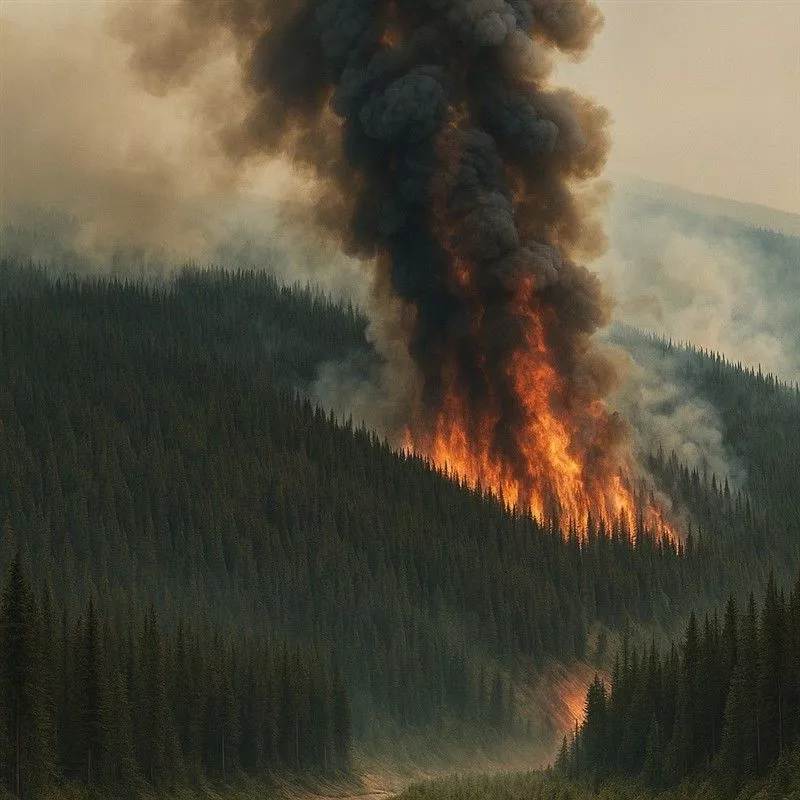
What Causes A Fire?
- The summer of 2021 was one of the most destructive of recent decades in Greece, with 1,301,239 hectares burned in 8,728 fires, primarily in Evia, Attica, Ilia, Mani, and Rhodes. The largest fire occurred in Evia, burning 511,854 hectares. This period was characterized by extreme heatwaves with record temperatures lasting multiple days (188 hours). The main causes included human negligence, agricultural activities, infrastructure (such as power lines), biomass accumulation due to rural abandonment, and lack of forest clearing. The phenomenon was intensified by high temperatures, low humidity, and strong winds.
- In 2023, in Rhodes, the large fire in July became one of the year’s most extensive, burning a total of 102,270 hectares, including about 15,950 hectares of protected areas (Natura and wildlife refuges). Within two days (July 21–23), the fire nearly doubled its burned area, severely damaging the natural environment, infrastructure, and threatening settlements. The fires were uncontrollable, and the fate of many forests remained uncertain. Particular concern arose for the area of Laerma, an essential habitat for the Rhodes deer (Dama dama), a natural symbol of the island.
- In 2023, in Dadia, the August 2023 fire in Dadia forest in Evros became the largest recorded in Europe, destroying approximately 942,500 hectares, of which 58% was part of Dadia National Park. The disaster severely affected the unique colony of black vultures in the Balkans and caused significant wildlife losses, with 189 animals killed, mainly turtles and roe deer. Despite restoration efforts, the full recovery of the ecosystem is expected to take decades, and the need for strengthened forest prevention and management is urgent. 2024 Parnitha,
- On June 29, 2024, a fire broke out in the Katsimidi area of Parnitha, burning forested areas and causing alarm among authorities. Strong winds, with gusts exceeding 100 km/h, complicated firefighting efforts. A total of 106 firefighters with 35 vehicles and 4 ground teams operated on-site, supported by 8 aircraft and 4 helicopters. Unconfirmed reports indicated an explosion at an electricity pole, which the electricity company denied. Authorities issued an emergency alert through 112 and imposed traffic regulations for safety reasons.
These events are not just news stories. They are reminders that we are all connected to the environment and that protecting it is not someone else’s job.
There are many different reasons why wildfires break out. It is clear that most are mainly caused by human error.
- 35% of fires are due to negligence (poor assessment during clean-up burning, power line short circuits, uncontrolled trash burning sites, omissions or mistakes by excursionists, etc.) Many fires begin in spring or just before summer, when sudden southern winds reignite extinguished hotspots.
- 20% are due to malicious acts.
- 45% recorded as unknown causes are distributed accordingly between negligence and intent. Arson by profiteers or organized groups that set fires in areas that are or could become buildable.
- Other people may have a pathological tendency to cause fires intentionally.
- Discarded cigarettes.
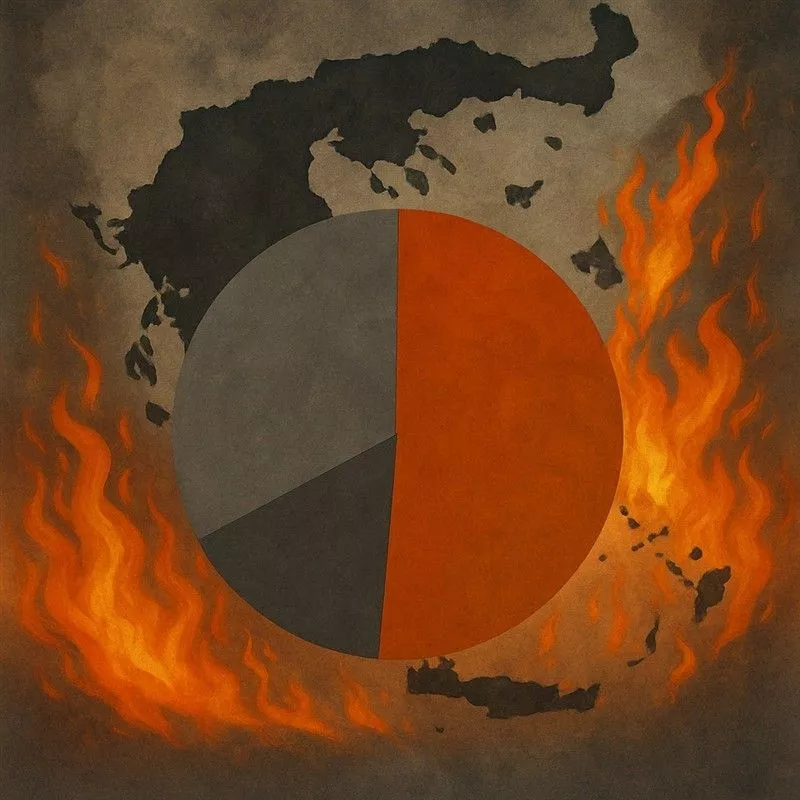
Website: Wildfire persent %

What Does The Law Say
The relevant legislation was issued on April 24, 2024, by Fire Service Regulation 20/2024
(Government Gazette) ΦΕΚ 2695/Β/09.05.2024 and the original document can be found here: (Government Gazette) ΦΕΚ 2695/Β/09.05.2024.
Obligations of Owners and Users of Properties Scope of application:
The regulation applies to owners, possessors, usufructuaries, tenants, or subtenants of plots and uncovered areas located:
- Within approved urban planning areas,
- Within settlement boundaries without an approved urban plan,
- In areas within a 100-meter radius from the borders of the above,
- In off-plan plots with a building, for areas not subject to forest law provisions
Obligations: - Clearing of the above areas from April 1st to April 30th each year
- Maintenance of the areas throughout the fire season (May 1st to October 31st)
- Submission of a cleaning declaration by April 30th to the National Registry for Preventive Fire Protection Measures via the digital platform of the Ministry of Climate Crisis and Civil Protection.
Exceptions:
Developed and maintained gardens or planted surfaces of uncovered areas of buildings, apartment blocks, etc.
Required Cleaning Tasks:
- Logging and removal of dry and broken trees and branches,
- Removal of combustible vegetation from the ground surface (e.g., leaf litter, dry grass, fallen dry branches),
- Pruning the base of tree crowns and increasing the starting height from the ground, depending on the tree’s age and species,
- Thinning of shrub vegetation as related to ground coverage,
- Removal of abandoned combustible, flammable, explosive, or easily ignitable materials, objects, and trash,
- Safe collection and transport of all cleaning residues.
Penalties for Non-Compliance:
- €1,000 fine for not submitting the cleaning declaration,
- Minimum 2 years imprisonment and a fine of 180 to 360 daily units for submitting a false declaration,
- In case of failure to clean, municipalities will proceed ex officio with the cleaning, charging the cost to the owners plus a €0.50 per m² fine, with a minimum charge of €200.
Duties of Municipalities and Fire Services Municipalities:
- Inform obligated parties,
- Conduct regular or emergency inspections
- Execute cleaning of the plot,
- Conduct on-site inspections,
- Execute urgent ex officio cleaning.
Fire Services,
- Inform the relevant Municipality by any means,
- Conduct on-site inspections upon request of the Municipality,
- Confirm in emergencies the immediate and especially high risk of fire outbreak or rapid spread.
Procedure and Execution – Plot Clearance Deadline Extended to June 15th
According to a new decision by the Ministry of Climate Crisis and Civil Protection (Government Gazette B’ 2015/25.04.2025),the deadline for the clearance of private plots and open spaces by owners, tenants, and land users has been extended to June 15th. This measure is part of the national wildfire prevention strategy, requiring the removal of dry vegetation, grass, and flammable materials.
Declarations of cleared land must be submitted through the official platform akatartista.apps.gov.gr, or via the website of the Ministry at civilprotection.gov.gr.
Spring wildflowers, which have flourished this year, are expected to reach the end of their natural life cycle by mid-June, making clearance both timely and necessary.
Detailed instructions, including who is obligated to comply and which types of land are affected, are available in the explanatory note published on the gov.gr website.
Property owners can simply enter the coordinates of their property, as indicated on their topographic plan (no attachments are required).
Access to the platform is granted
- via the TAXISnet codes,
- by entering the National Cadastre Code (ΚΑΕΚ), OF THE PLOT OR THE COORDINATES OF THE PROPERTY, IF IT IS LOCADED IN AN AREA WHERE THE Cadastre is not operational (i.e the property is registered as under development or under transfer), as referenced in the links:
This extension makes a lot of sense, because it is complete nonsense to start mowing wildflower meadows and garden land in spring.
April and May are the main flowering months for wildflowers. These provide a vital food source for butterflies, bees and other beneficial insects.
In addition, these plants must complete their short life cycle in order to reproduce. This means that these wildflowers (many of which are mistakenly dismissed as weeds) must also have the opportunity to form seeds after flowering. Therefore, mowing should only take place once they are completely dry and have seeded.
If we mow fresh green meadows, olive groves and garden areas, there will be fewer and fewer wildflowers, orchids and other protected species in the near future.
There will also be fewer bees, butterflies and other beneficial insects.
“We do not want to cause devastation to an already strained environment, but must take a targeted and logical approach to fire prevention”
“We don’t need to be firefighters or frontline volunteers to help. It’s enough to take care of the small space that belongs to us. A clean and well-maintained garden, a yard free of dry grass, and regular upkeep of our outdoor area all contribute significantly to reducing risk.”
General Measures to Prevent Wildfires:
Keep an eye on the weather, even in winter and spring. If it has not rained for a long time and wind (especially hot, dry south winds) is forecast, it is better not to burn garden waste on what may still be a windless day,
- Remove dry and flammable materials from your space,
- Prune plants regularly to avoid excessive biomass buildup,
- Use fire-resistant plants and avoid high risk materials in garden design,
- Maintain irrigation systems to ensure soil moisture and balance,
- Stay informed and collaborate with your neighbors, prevention is more effective when it’s shared,
Last but not least, it would be desirable (if not essential!) for the state to take appropriate action;
- Electricity pylons and cables must be able to withstand strong winds and cables must not touch each other in storms,
- Dry weeds must be removed, especially under power lines,
- Investment in infrastructure: construction of composting plants for orderly biomass disposal,
- Severe punishment and prosecution of arson,
- Burned land should not be allowed to become building land,
- Education of the population about the dangers and correct measures,
- It is essential that landscape management plans are drawn up across municipalities and regions by various professionals (forestry scientists, environmental planners and experienced firefighters).
Small steps that make a huge difference
Monoculture forests (especially pine forests) must be replaced by mixed forests. Firebreaks and access routes, fire reservoirs, etc. must be included in those plans.

Nature Need Us –and We Need Nature
At CHLOROPLASTES – Gardens & Nursery, we know that a beautiful garden is not just a matter of aesthetics.
It is a place of life. A place of responsibility.
If we can help people properly care for the green around them, then we too contribute in our own way to reducing risk.
Without exaggeration. Without fear. With love for nature and respect for the common good.
This summer, let’s stand by nature. Because without it, there is nothing left to care for.
CHLOROPLASTES – Garden & Nursery
We care for the environment.
We care for life
Website links:
- https://www.keeptalkinggreece.com/2025/04/24/greece-fire-season-clearing-plots.
- https://kolymbaricourier.com/2025/04/27/extension-of-land-clearance-deadline/
- http://civilprotection.gov.gr/
- https://www.gov.gr/ipiresies/polites-kai-kathemerinoteta/periballon-kai-poioteta-zoes/delose-katharismou-oikopedou
- https://akatharista.apps.gov.gr/