
From theory to practice
” How Research Models Guide Landscape Architects’ Decision-Making? “
In the complex world of landscape architecture, the integration of research into design processes isn’t just an academic exercise, it’s a practical necessity for creating meaningful, effective spaces. “Landscape design based on research” provides a valuable bridge between theoretical models and real-world applications, offering landscape architects concrete examples of how different research approaches can guide decision-making.
” The Research-Design Spectrum: Five Pathways to Informed Decisions”
The relationship between research and design exists along a spectrum, with each approach offering unique advantages depending on the project context, site conditions, and design objectives. By understanding these five models, landscape architects can make more informed choices about how to incorporate research into their design processes.
Table of Contents
1. The Artistic Model: Freedom within a Research Framework
When a project demands creative expression and aesthetic innovation, the artistic model offers landscape architects the freedom to set research aside during the initial concept generation. This doesn’t mean ignoring research entirely, rather, it serves as an educational background that informs the designer’s judgment when assessing and modifying concepts.
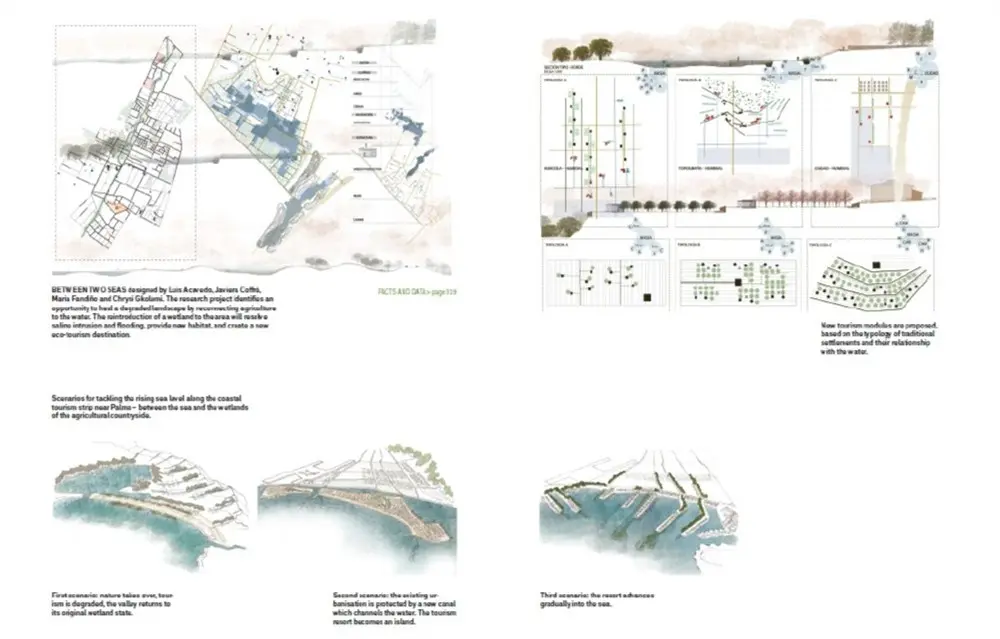
Between Two Seas: Walking Istanbul’s Changing Landscape
“Between Two Seas” is a 60-kilometer walking route connecting the Black Sea and Marmara Sea in western Istanbul. Designed as a four-day journey divided into 15-kilometer segments, the route takes hikers through Istanbul’s rapidly transforming urban periphery. The project emerged following the 2013 Gezi Park protests as a way to help citizens directly experience and witness the dramatic changes reshaping their city.
Walkers traverse diverse landscapes including lignite mines, the new airport development area, the 3rd Bosphorus Bridge road, industrial zones, residential neighborhoods, urban gardens, and historical sites like the Yarımburgaz Caves—Istanbul’s oldest settlement. Created through collaboration between an urban geographer, graphic designer, architects, trail maker, and various other professionals, the project serves as both documentation and political statement. Each hiker becomes an active witness to urban transformation, contributing to an evolving record of landscape changes through maps, photographs, and other documentation.
The project has gained significant traction, with over 30 organized group walks, special excursions for research institutions like Harvard and KTH Royal Institute of Technology, and 50,000 printed maps distributed throughout Istanbul. “Between Two Seas” has since expanded to Athens and joined the ‘Cultural Routes in Turkey’ Association, demonstrating how a simple walking route can become a powerful tool for experiencing, understanding, and questioning landscape change.
2. The Intuitive Model: Research as Creative Inspiration
For projects where emotional response and intuitive connections are paramount, the intuitive model allows research to inspire design concepts without constraining creativity. This approach trusts the designer’s ability to absorb research knowledge and transform it through an instinctive dialogue between idea and site.
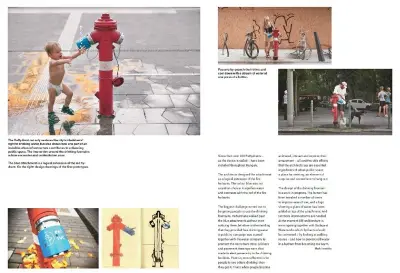
The “Rehydrant” project in Budapest demonstrates this model’s effectiveness. Young designers responded to the city’s heat island problem by transforming fire hydrants into drinking fountains. Their intuitive solution was inspired by research but expressed through creative transformation. This approach supports decision-making in projects where innovative, human-centered solutions are needed to address complex urban challenges. (Jansson and Diedrich 2019)
Edmonton’s Fire Hydrant Water Tap Project, City added water taps to 13 fire hydrants across Edmonton.
- Safe drinking water available to anyone as part of extreme weather response
- Primarily helps vulnerable people stay hydrated during heat waves
- Used for drinking, washing, sanitizing, and cooling off
- Available 24/7 until fall, located throughout the city
- Users call them “vital,” especially for homeless populations
- Part of broader heat response efforts, including community water donation drives
The Secret Code of Fire Hydrants: Fire Hydrant Color Code System Cap Colors (Flow Rate)
- Blue caps: Best flow rate (over 1,500 gallons per minute)
- Green caps: 1,000-1,499 gallons per minutes
- Orange caps: 500-999 gallons per minutes
- Red caps: Less than 500 gallons per minutes
Body Colors (Water Source)
- White: Connected to public water systems
- Yellow: Connected to main water lines
- Red: Special operations only
- Violet: Connected to untreated water sources
Fire hydrants are critical plumbing fixtures for public safety, connecting directly to main water lines through underground risers to provide high-pressure water during emergencies.
Video from City news: https://youtu.be/CqF77xPWxOU
Reel: https://youtube.com/shorts/QIk3t1cEJtk?si=pHmF8exX0G5_h-Nv
3. The Adaptive Model: Translating Research to Site Realities
When projects require responsiveness to unique site conditions while still maintaining research integrity, the adaptive model offers a balanced approach . Here, research inspires the design concept, but its translation retains the form and content of the information while adapting to site-specific needs.
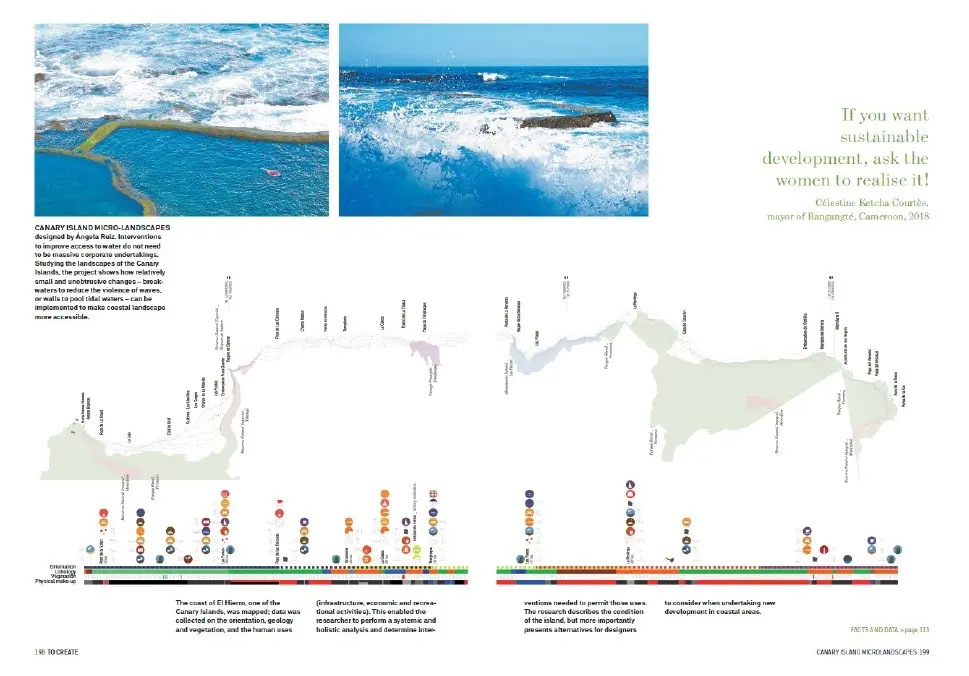
Angela Ruiz’s “Micro Landscapes” project in the Canary Islands perfectly illustrates this model. Based on comprehensive PhD research mapping the archipelago’s coastal formations, the project adapted traditional Canarian rock pools for contemporary leisure uses with minimal alterations. This model helps architects make decisions that honor both research findings and site-specific characteristics, particularly valuable in culturally or ecologically sensitive contexts.
Ruiz’s Distinctive Strengths:
- Perceptive Observation – Her exceptional ability to recognize value in overlooked landscapes, being the first to acknowledge the Canarian coastline as a series of micro-landscapes worthy of study.
- Research Integration – Her skill in translating comprehensive PhD research directly into design concepts, exemplifying the adaptive model of research-based design.
- Contextual Sensitivity – Her talent for responding to the unique challenges of the Canary Islands’ geographic isolation, volcanic terrain, and tourism pressures.
- Minimal Intervention – Her mastery of restraint, making only the smallest necessary modifications while preserving ecological and cultural integrity.
- Cultural Preservation – Her dedication to honoring traditional uses of these coastal formations while adapting them for contemporary needs.
By recognizing these coastal micro-landscapes as worthy subjects of study and gentle intervention, Ruiz’s work embodies an ethics of restraint and respect. It questions the anthropocentric assumption of human dominance over landscape and instead proposes a more humble position—one where design becomes an act of listening to what the land already offers.
4. The Analytical Model: Research at the Core of Design Decisions
For complex projects requiring pragmatic solutions to multifaceted problems, the analytical model places research at the center of the design approach . Research informs concept generation through a cognitive process that transposes findings in light of site issues and program concerns.
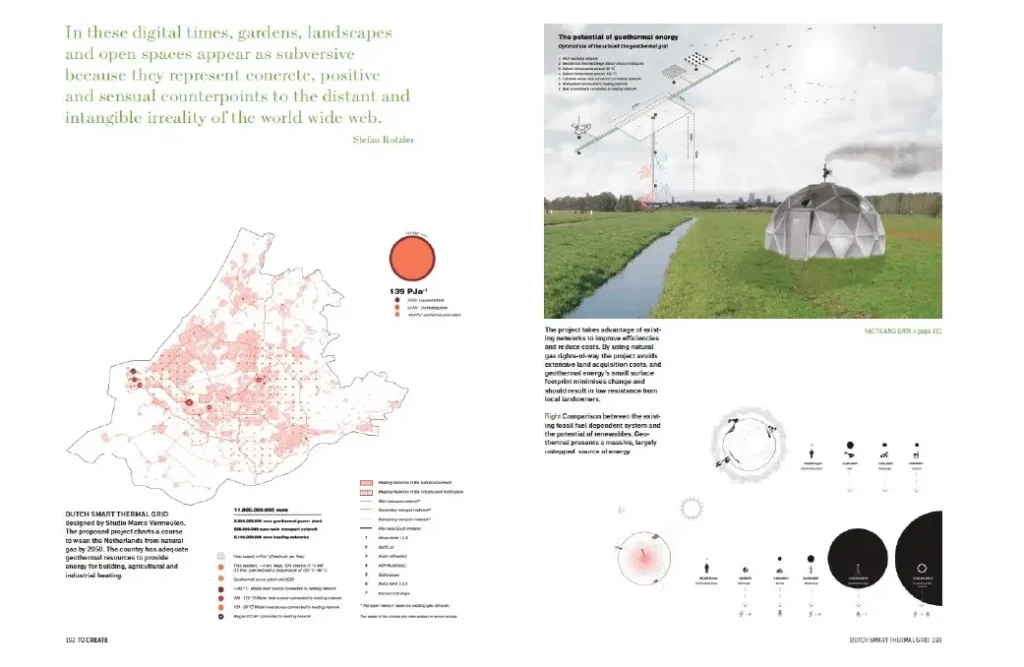
Studio Marco Vermeulen’s “Dutch Smart Thermal Grid” project exemplifies this approach by analyzing existing gas pipeline infrastructure research and studying spatial possibilities for repurposing it for thermal energy in a post-fossil period. This model supports decision-making in projects with technical complexity, helping architects develop innovative solutions grounded in thorough analysis.
The key discovery in the Dutch Smart Thermal Grid project is that the Netherlands already has an extensive gas pipeline infrastructure that can potentially be repurposed for thermal energy distribution in a post-fossil fuel era. The research revealed that:
- Geothermal energy from depths of 2-4km could meet a large portion of the Netherlands’ heating needs, based on current knowledge of the subsurface
- The existing gas infrastructure network provides a valuable foundation that could be adapted for transporting hot water instead of gas
- This repurposing approach is more efficient than building entirely new systems
- A phased implementation (starting with regional networks, then expanding) offers a practical transition path
- The spatial possibilities of reusing this infrastructure for thermal energy distribution are significant and could accelerate the country’s energy transition
This discovery represents a pragmatic solution that leverages existing assets while addressing the urgent need to move away from natural gas dependency.
link: https://marcovermeulen.eu/en/projects/dutch+smart+thermal+grid/
5. The Systematic Model: Research-Determined Design Solutions
When projects face critical functional requirements or safety concerns, the systematic model provides a structured approach where research determines the design concept. This model views design as problem-solving driven by established rules and procedures, sometimes leading to standardized solutions.
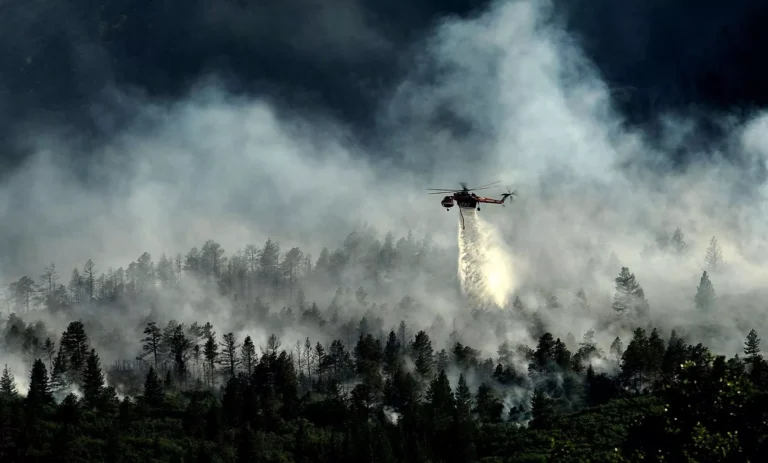
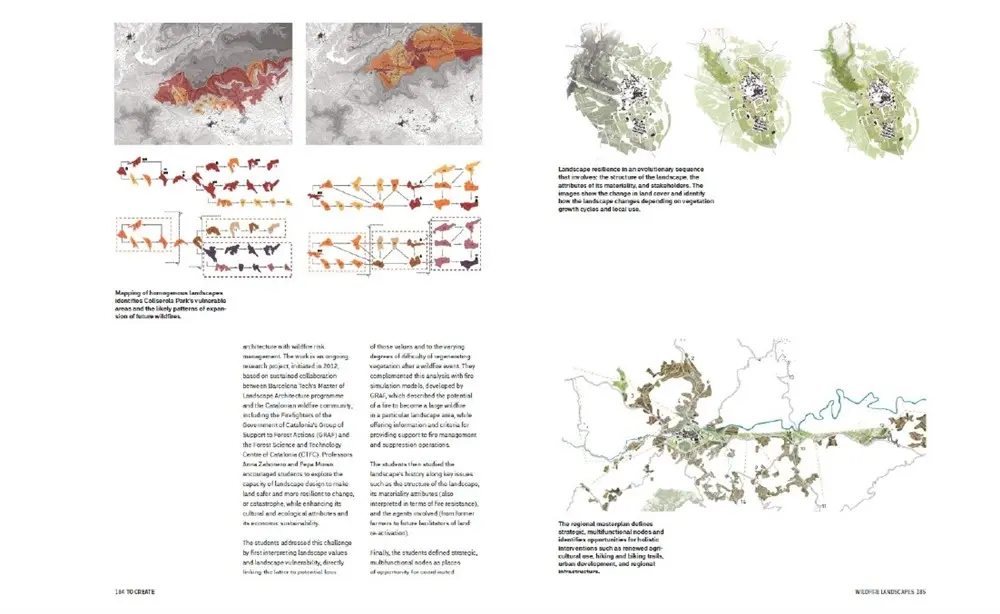
The “Wildfire Landscapes” project in Barcelona by Llorenc Castell demonstrates this approach, using data from wildfire propagation research to develop design proposals for urbanization and afforestation that reduce fire risks in densely built-up areas. This model guides decision-making in projects where technical performance and safety are non-negotiable priorities.
Practical Applications for Decision-Making
Understanding these models offers landscape architects several practical benefits:
- Methodological clarity: By identifying which model best suits a particular project, architects can articulate their design process more clearly to clients, collaborators, and stakeholders.
- Appropriate research integration: Different projects require different relationships between research and design, recognizing this helps architects avoid forcing inappropriate methodologies onto projects.
- Balanced approaches: Many successful projects combine elements from multiple models, allowing architects to adapt their approach as projects evolve.
- Educational framework: For students and emerging professionals, these models provide a structured way to understand the relationship between research and design decisions.
Conclusion: Informed Choices Lead to Better Landscapes
The examples in Chapter 3 demonstrate that there is no single “correct” way to integrate research into landscape design. Instead, landscape architects must make informed choices about which approach best serves each project’s unique requirements.
By understanding the full spectrum of research-design relationships from the artistic freedom of “research set aside from design” to the structured approach of “research determines design” landscape architects can develop more thoughtful, effective, and contextually appropriate solutions. This knowledge empowers better decision-making throughout the design process, ultimately leading to landscapes that better serve both people and the environment.
Whether you’re a student developing your first research-based design or an experienced practitioner seeking to refine your methodology, these models provide valuable frameworks for making more informed design decisions in an increasingly complex profession.
5 Models
- Rehydrant, Budapest (Article + 3.3 (page 32 ))
- Micro Landscapes Canary Islands 3.4 (page 33)
- Wildfire Landscapes, Barcelona 3.6 (page 35)
- Studio Marco Vermeulen, Dutch Smart Thermal Grid, NL 3.5(page 34)
- Between two seas, Mallorca 3.2 (page 31)
Relevant: Pdf Notes
Extra Theory:

As professionals, we bring nature to the forefront with sustainable landscapes inspired by the natural beauty of Crete. We select native, drought-resistant plants, creating spaces that not only respect the environment but also enhance natural growth. From the beginning, our company was built on a philosophy that harmonizes with the land designing landscapes that showcase the authenticity of the Mediterranean.
Wer don’t just design landscapes we revive Crte’s ecosystem, creating sustainable spaces that honor the land and its history.